
AI Qipao Try‑On — See the Look
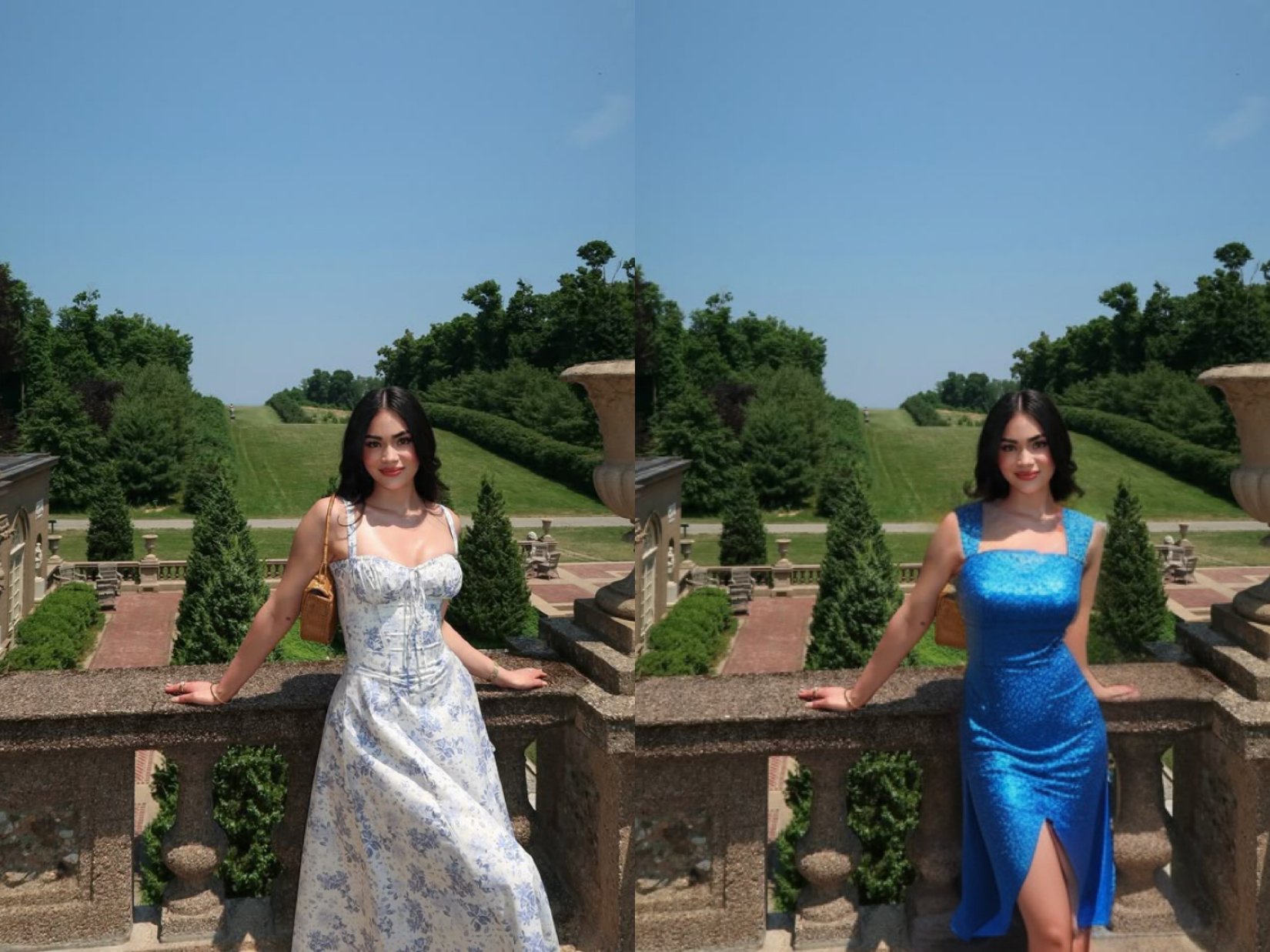
You don’t need a qipao.
You don’t need a perfect figure,
to go back in time,
or even to leave your home.
All you need is one photo—maybe your silhouette by the window yesterday,a moment three years ago when the wind lifted your hair on a trip,or just an ordinary half-body selfiefrom your phone gallery.
Upload it.
Wait a few seconds.
Suddenly, the you in the image changes—a simple mandarin collar rises gently,
frog buttons close like blooming buds,
silk patterns flow along the curve of your body,
as if stepping out of an old photograph,
or like a version of yourself that never lived,
finally wearing that qipao—the one you’ve always wanted to try,but never dared.
The color is moon-white or deep indigo,
the pattern subtle bamboo or finely embroidered orchid—
not loud, but glowing.
You look at the screen,
not stunned,
but quietly familiar—
as if hearing:
So this is also who I can be.
Why Do We Want to Wear a Qipao with AI?
Not for nostalgia.
Not for posting on social media.
Not to become a “classic beauty.”
Because for many of us,
the qipao has never just been clothing.
It’s the navy silk dress at the bottom of your mother’s wardrobe,
your grandmother’s shy gaze in a youth photo,
a figure turning in an old film,
or the elegant arc of a neighbor’s hem
as she walked through the alleyway in your childhood.
It’s a femininity sealed by time—
not weakness, not compliance,
but a quiet self-possession,
a strength that says: I am here,
but I don’t need to shout.
We hid ourselves in modern shells,
and forgot
that the body once longed to be treated with reverence.
Trying on a qipao with AI isn’t about “becoming beautiful.”
It’s about seeing again:
that part of you buried by daily life—
the part that wants to be gently seen.
What Does This Virtual Try-On Quietly Give Us?
1. A Tender Dialogue with Family Memory
When you wear the AI-generated qipao,
you don’t just see yourself—
you see your mother’s gestures,
your grandmother’s eyes,
those female figures from blood and memory you never met.
In that moment, you’re not imitating the past,
but saying:
I am also part of you.
2. A New Acceptance of Your Body
We hesitate: Am I thin enough? Too broad-shouldered? Not curvy?
But when AI “dresses” you in a qipao,
it doesn’t judge or alter—
it simply lets the fabric follow your shape.
And suddenly you realize—
Beauty isn’t about standards,
but about being treated with care.
3. A Return to Identity in the Digital Age
We live fast,
yet sometimes wonder:
Who am I?
Beyond employee, mother, wife—
who else can I be?
When AI lets you wear a qipao,
that version of you stands in soft light,
silent,
yet answering:
I can also be quiet,
warm,
carrying a touch of old-world dignity.
4. An Outlet for the “I’ve Always Wanted To” Self
Many are afraid to wear a qipao—
too bold, too out of place, too open to judgment.
AI offers a safe space:
you can try, see, feel—
without stepping into the street.
It’s not escape,
but a mental rehearsal—
letting me first wear it in my heart.
5. Making Tradition Touchable
The qipao isn’t a museum exhibit.
It’s alive, flowing.
When AI places it on today’s you,
it’s no longer “of the past,”
but a continuing aesthetic and attitude—
about restraint, grace,
and how women can exist on their own terms.
It’s Not Just a Costume Change—It’s a Return to Self
You don’t need to buy a qipao.
You don’t need to share the image.
It can stay only in your phone,
like a letter to yourself,
saying:
You can be treated with reverence.
You can hold quiet strength.
You can, in your own time,
live like an unwritten poem.
How to Begin? It’s Simple.
- Choose a photo that feels real—
not polished, not smiling,
just one where you were truly you. - Upload it.
- Pick a qipao style:
simple, vintage, modern reinterpretation… - Wait a few seconds. Watch that you,
slowly put on the garment. - Look at her,
and ask:
In this moment, did you feel, just a little,
like you were gently recognized?
The Tech Is Light, But Memory Is Heavy
We think AI shapes the future.
But sometimes, it helps us look back—
letting the unlived possibilities
breathe softly in the virtual.
You upload a photo.
AI gives back:
a reconciliation with yourself,
a conversation with time,
a memory worn on the body.
And maybe—
that’s the most poetic form technology can take:
not to turn you into someone else,
but to show you:
I could have been this beautiful,
this calm,
this much my own.
Just an old-fashioned lamp,
lit for the you who deserves to be gently seen.